
Cardiac Imaging
CardioLite®: A key tool for evaluating cardiac blood flow
A Tc-99m sestamibi tracer that helps doctors see how blood flows to the heart.
Proven performance across stress-and- rest imaging
CardioLite has been part of cardiac imaging for decades,
providing clinicians with a well understood tracer. Its
predictable behavior in the body helps nuclear medicine
teams perform both stress and rest imaging, the two
phases used to evaluate heart function.1
Imaging that helps reveal reduced cardiac blood flow
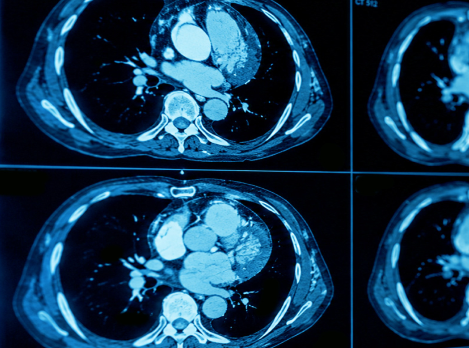
CardioLite helps doctors see where blood flow to the heart muscle may be reduced. As a well-established Tc-99m sestamibi tracer, it supports clear, easy-to-interpret images that assist clinical teams in assessing potential heart-function concerns.
Connect with our team
Whether you need product details, ordering guidance, or workflow support, our team is here to help keep imaging operations running reliably.
Disclaimer
Important Safety Information
INDICATIONS AND USAGE
Myocardial Imaging: CardioLite® (Kit for the Preparation of Technetium Tc99m Sestamibi for Injection), is a myocardial perfusion agent that is indicated for detecting coronary artery disease by localizing myocardial ischemia (reversible defects) and infarction (nonreversible defects), in evaluating myocardial function and developing information for use in patient management decisions. CardioLite® evaluation of myocardial ischemia can be accomplished with rest and cardiovascular stress techniques (e.g. exercise or pharmacologic stress in accordance with the pharmacologic stress agent’s labeling).
CONTRAINDICATIONS
None known.
IMPORTANT SAFETY INFORMATION
CardioLite® has been rarely associated with acute severe allergic and anaphylactic events of angioedema and generalized urticaria. In some patients the allergic symptoms developed on the second injection during CardioLite® imaging. The most frequently reported adverse events include headache, chest pain/angina, ST segment changes on ECG, nausea, and abnormal taste and smell.
Infrequently, death has occurred 4 to 24 hours after Tc99m Sestamibi use and is usually associated with exercise stress testing (See Section 5.2). Pharmacologic induction of cardiovascular stress may be associated with serious adverse events such as myocardial infarction, arrhythmia, hypotension, bronchoconstriction and cerebrovascular events.
WARNINGS AND PRECAUTIONS
In studying patients in whom cardiac disease is known or suspected, care should be taken to assure continuous monitoring and treatment in accordance with safe, accepted clinical procedure.
Caution should be exercised and emergency equipment should be available when administering CardioLite®.
Before administering CardioLite® patients should be asked about the possibility of allergic reactions to either CardioLite® or Miraluma®. Miraluma® is an identical compound used in breast imaging.
The contents of the vial are intended only for use in the preparation of Technetium Tc99m
Sestamibi and are not to be administered directly to the patient without first undergoing the preparative procedure.
REFERENCES
1. CardioLite® US Package Insert. SHINE Technologies, LLC. 2019.
2. World Nuclear Association. Radioisotopes in medicine. Updated January 21, 2026. Accessed April 13, 2026. https://world-nuclear.org/information-library/non-power-nuclear-applications/radioisotopes-research/radioisotopes-in-medicine
©2026 SHINE. | All Rights Reserved. | MKT.CAR.0013.V3